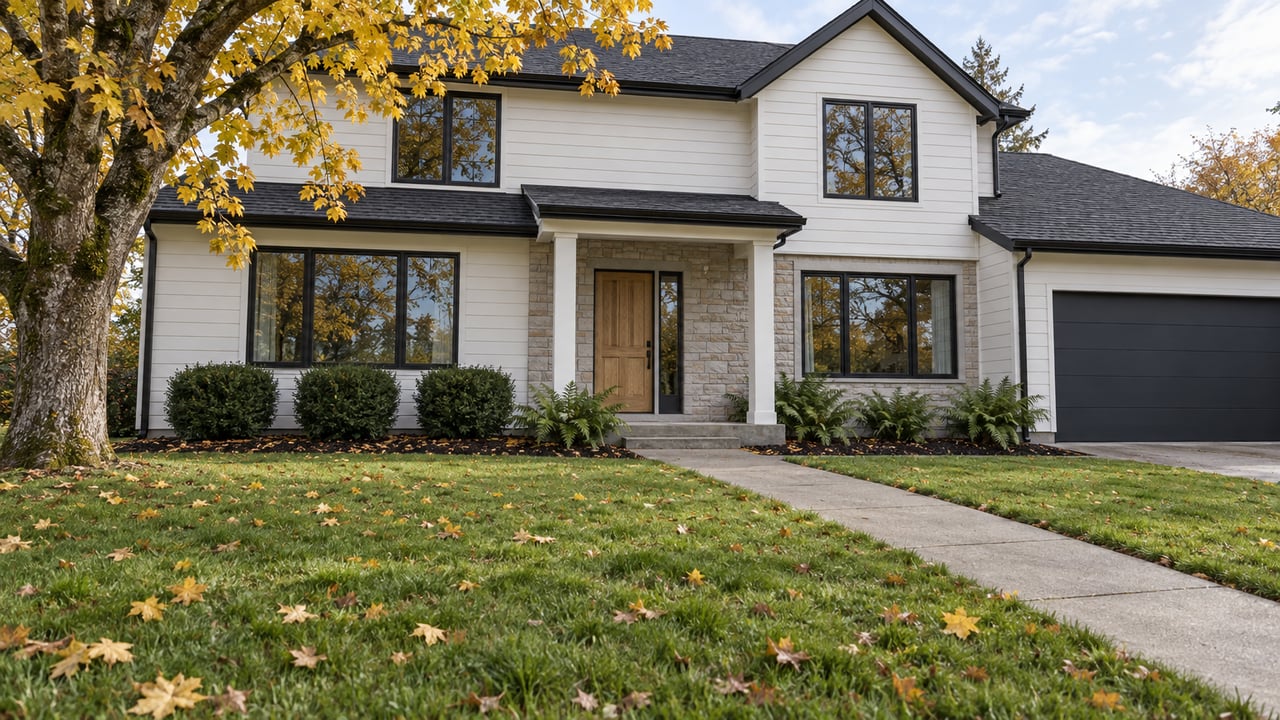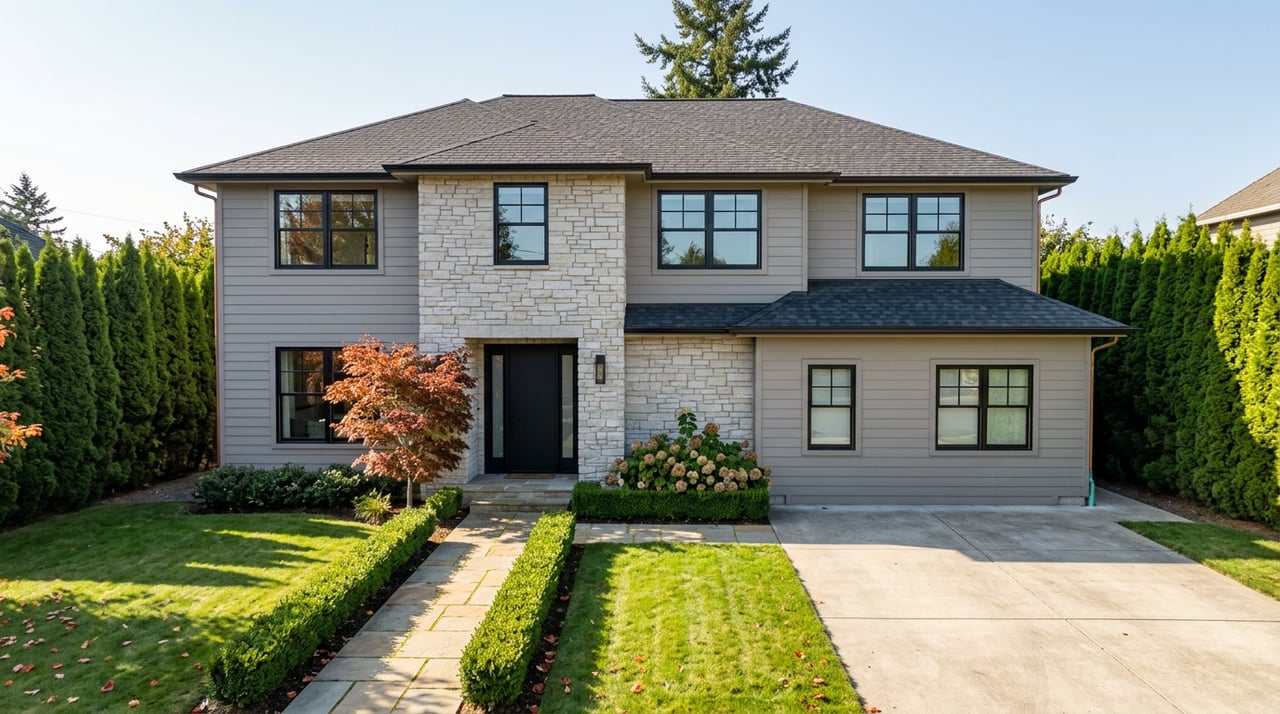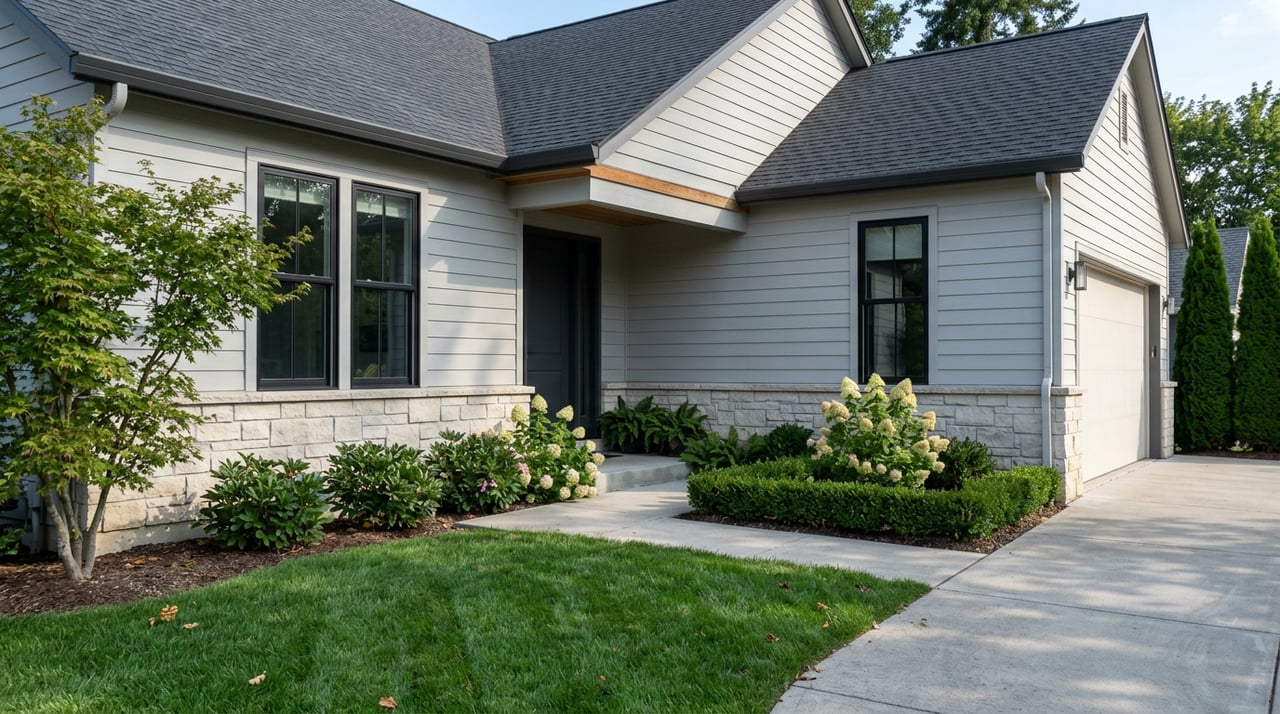
A buyer we'll call by their situation, not their name, got pre-approved this spring around Tigard's citywide median. Their lender pulled a number, ran the math, and handed over a budget built for "a house in Tigard." Then they toured two listings in the same week. One sat on a quarter acre off Bull Mountain Road with a three-car garage and a builder still finishing the subdivision next door. The other was a 1960s ranch two blocks from Main Street, walking distance to Symposium Coffee, on a lot a third the size. Both were, technically, priced near that same median. Neither looked like the other's competition for a single dollar.
That's the friction nobody warns you about when a portal hands you one number for an entire city. Tigard's median isn't describing a market. It's blending four of them.
The median blends markets that don't compete
Tigard spans roughly 12 square miles between Beaverton, Tualatin, and Lake Oswego, and the housing stock inside those miles splits into distinct bands that rarely bid against each other:
| Sub-market | Typical price range | Housing stock | What anchors it |
|---|---|---|---|
| Bull Mountain & River Terrace | $650,000 to $1.2 million+ | New and newer construction on larger hillside lots | Territorial views, active subdivisions, Scholls Ferry Road access |
| Established neighborhoods off Walnut & Bull Mountain Road | $525,000 to $750,000 | 1970s to 1990s construction | Mature streets, proximity to Summerlake Park |
| Downtown Tigard | $425,000 to $600,000 | Older housing stock, active reinvestment | Main Street redevelopment, future light rail terminus |
| Metzger & Tigard Triangle | $400,000 to $550,000 | The most accessible entry points in Washington County | Highway 217/99W access, proximity to Washington Square |
A buyer shopping the Triangle and a buyer shopping River Terrace are not competing for the same house, the same lender comp, or the same inspection issues. They're not even competing for the same commute. Combining them into one figure produces a number that describes no actual property in the city.
A single number moving isn't news, it's composition
Here's where it gets useful instead of just interesting. When a citywide median jumps or drops from one reporting window to the next, the instinct is to read it as the whole market shifting. In Tigard's case, it's usually the mix of what happened to sell that month.
Downtown Tigard posted a median sale price of $650,000 in February 2026, up 26.2 percent year over year, with homes going pending in around 11 days. Meanwhile, over the three months ending May 2026, West Tigard homes sold at a median of $825,000, up 0.8 percent, but with days on market stretching to 23, nearly three times the 8 days recorded a year earlier. Two pockets of the same city, moving in opposite directions on speed, both posting eye-catching percentage swings on price.
Neither number is a citywide trend. Both are small samples. Downtown Tigard and West Tigard each transact a handful of homes in a typical month, so one estate sale or one distressed listing can swing the percentage by double digits without moving the underlying market at all. Meanwhile, Tigard's broader citywide figures show the same instability: portal data put the citywide median list price at $651,000 as of August 2026, a 5 percent pullback from the prior month, while separate data covering the three months ending April 2026 showed a $575,000 median sale price, down 8 percent year over year, with 175 homes sold that month compared to 189 the year before. Read individually, each of those numbers looks like a market correction. Read together, across overlapping but not identical windows, they look more like proof that whichever sub-market happens to close escrow in a given month is doing most of the talking.
For a buyer, the takeaway isn't "the market is down" or "the market is up." It's that a citywide percentage change is close to meaningless unless you know which neighborhood generated it.
The west side is actively building a different city
The gap between Tigard's sub-markets isn't static. It's widening, and there's a specific reason why.
In February 2023, Metro approved Tigard's application to open roughly 500 acres near Roy Rogers Road, between Scholls Ferry and Beef Bend roads, for what the city calls River Terrace 2.0. It was the first time a Portland-area city had used a state law allowing a land swap rather than a traditional urban growth boundary expansion, trading buildable land elsewhere in the region for the right to develop out west. The plan clears the way for 3,000 to 4,500 new housing units.
The original River Terrace, the one already built, is close to hitting its target. City planners estimated the first phase would produce around 2,587 dwelling units. Nine years after the first residents moved in, the area sits at 2,431 entitled units, just short of that projection. As the Beaverton Valley Times reported, Tigard senior planner Schuyler Warren told the city council that reaching that scale in under a decade amounts to "a phenomenal success." That track record is why the city and Metro were comfortable greenlighting a sequel roughly twice the size.
River Terrace 2.0 is still in its planning phase as of this writing. According to the city's own project page, the Community Plan process is expected to wrap in the second half of 2026, meaning the zoning and infrastructure rules for those 500 acres are being finalized right now. Reporting from August 2025 put the earliest development applications no sooner than summer 2026. In other words, the west side of Tigard is not done building, and the next wave hasn't even broken ground.
You can already see the current wave's pricing. A spring 2026 snapshot of River Terrace's active new-construction listings showed 47 homes for sale at a median listing price of $625,000, with an average of 58 days on market and about two offers per listing. Down the road, River Terrace Crossing is building 1,400 to 3,600 square foot homes on 4,400 to 7,400 square foot lots starting in the upper $700s. That's the west-side band from the table above, and it's the band getting reinforced with new supply for years to come. Downtown's older housing stock, by contrast, isn't getting replaced at anything close to that pace. The spread between Tigard's cheapest and most expensive addresses has a structural reason to keep growing, not narrow.
Two malls, one park, and neither serves the same buyer
Part of why these sub-markets stay separate instead of blending into one continuous price curve comes down to what each one is actually built around.
Washington Square, the largest enclosed mall in Oregon, sits just outside Tigard's border and anchors daily life for the Metzger and Tigard Triangle buyer, who is often trading square footage for a five to ten minute drive to Nordstrom, groceries, and services along 99W. Bridgeport Village, the open-air retail and dining corridor just south in Tualatin, pulls harder on Bull Mountain and River Terrace buyers already oriented toward Scholls Ferry Road and the I-5 corridor. Cook Park, Tigard's largest park along the Tualatin River, and the Fanno Creek Trail that threads through downtown, serve a walkable, outdoor-oriented buyer who's often choosing the older housing stock precisely because it sits closer to that green corridor than to either mall.
Commute infrastructure splits along similar lines. WES Commuter Rail already connects the Tigard Transit Center to Beaverton, useful mainly for buyers whose sub-market sits near that line. The planned SW Corridor MAX extension is slated to terminate in Tigard, and when it's built, it's expected to reshape transit access for the southwest metro, likely benefiting downtown and the Triangle more than the hillside neighborhoods further west. None of this is a ranking of one pocket over another. It's a reminder that "Tigard" isn't one commute, one retail anchor, or one park. It's several, stitched together under one city limit sign.
What this means for your search
If you're comparing Tigard to other suburbs on a spreadsheet, the citywide median is a reasonable starting filter. Once you've decided Tigard is in range, drop the citywide number entirely and price against the sub-market you're actually shopping. A $625,000 new build in River Terrace and a $625,000 fixer near downtown Main Street are not the same purchase, the same resale trajectory, or the same five-year bet. One is riding a construction pipeline that's about to double in size. The other is competing against housing stock that's decades older and, in some cases, actively being reinvested in rather than replaced.
FAQ
Why did some Tigard neighborhoods post 20-plus percent price swings while the citywide number barely moved? Small sample sizes. Sub-neighborhoods like Downtown Tigard and West Tigard often see only a handful of closed sales in a given month, so one high or low sale can swing the reported percentage change dramatically without reflecting a real shift in value across the area.
Is River Terrace 2.0 approved and ready to build? Metro approved the land swap in 2023, but the city's Community Plan, which sets the zoning and infrastructure rules, isn't expected to be finalized until the second half of 2026. The earliest development applications weren't projected until summer 2026, so the next wave of homes is still a year or more from breaking ground.
Does being near the WES Commuter Rail or Washington Square actually change a home's value? It changes which buyer pool you're competing in more than it changes the price band outright. A Metzger or Triangle buyer prioritizing quick access to Washington Square and Highway 217 is shopping a different comparison set than a Bull Mountain buyer prioritizing Bridgeport Village and Scholls Ferry Road access, even when both are technically shopping "Tigard."
If you're trying to figure out which of these sub-markets actually fits your budget and your daily life, that's the exact kind of comparison Peak Realty works through with buyers every week. Get your free home valuation and let's talk about which side of Tigard makes sense for you.